

The technology behind a $20M fashion rental marketplace
Pickle started as a simple poll app for fashion trends, but the founders saw something bigger. They pivoted to peer to peer fashion rental, essentially becoming the Airbnb for closets. Today one in four women aged 18 to 35 in Manhattan uses Pickle. The platform hosts over 300,000 items, operates across NYC, LA and Miami, and has raised $20 million from FirstMark Capital, Craft Ventures, Burst Capital and FJ Labs. Users rent, lend and buy directly from each other's closets, with same-day delivery through Uber and DoorDash. We built the technology that powers this marketplace.
Visit Pickle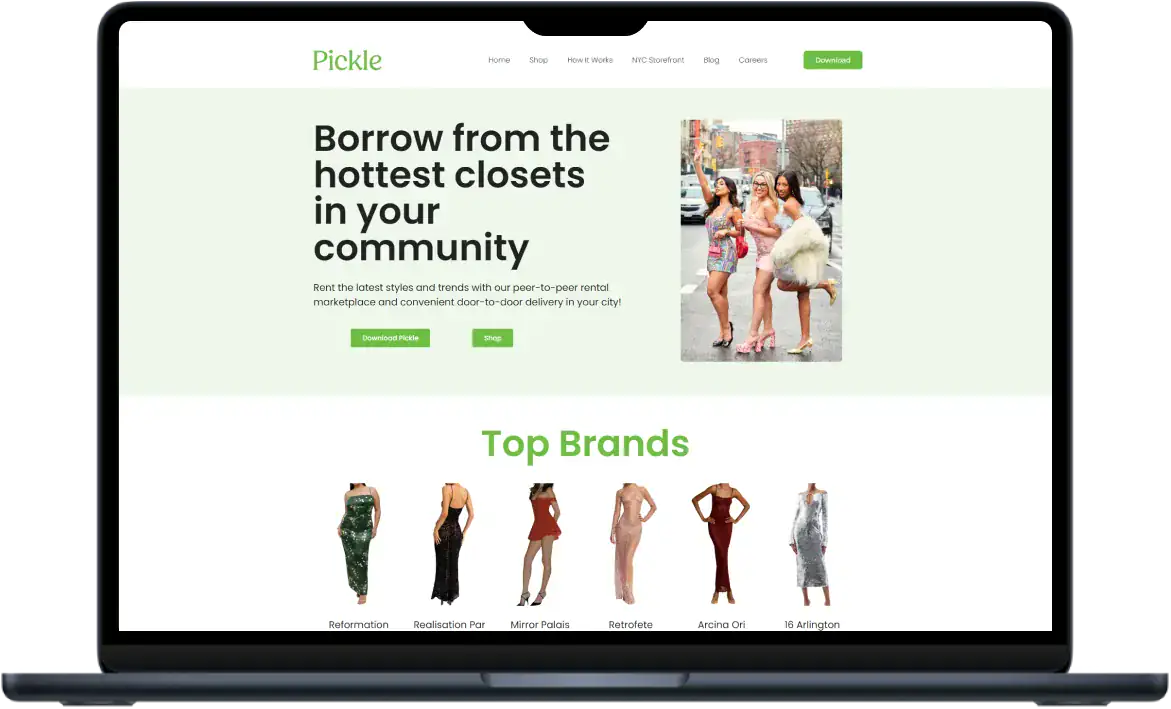
- Industry
- Fashion tech / P2P marketplace
- Duration
- 1 year
- Support
- 1 year
- Location
- New York, USA
What was breaking
After closing their seed round, Pickle needed to deliver on investor expectations. The existing platform struggled with performance under growing traffic, and users experienced slow load times, especially during peak rental periods.
The marketplace needed real-time inventory sync, secure identity verification through Stripe, cross-device data access, and infrastructure that could scale with rapid user growth across three cities at once.
A serverless marketplace
We architected a fully serverless marketplace using React and Next.js for the web, React Native for iOS and Android, and AWS for infrastructure. The backend runs on Lambda functions with DynamoDB for real-time inventory, AppSync for GraphQL APIs, Amplify for authentication, and API Gateway for routing.
Serverless was the right shape for this business specifically. Rental demand is spiky, concentrated around evenings and weekends and events, and a marketplace that costs nothing when idle but absorbs a Saturday night surge without provisioning is worth more to a company at that stage than raw throughput.
Server-side rendering
Server-side rendering in Next.js handles SEO and initial page loads, which delivered a 500 percent performance improvement.
For a marketplace, rendering on the server is not only about speed. Every listed item is a page that needs to be indexable, and 300,000 items rendered client-side are invisible to search engines.
Payments and identity
We integrated Stripe for identity verification and payments, ensuring secure transactions between peers.
Peer to peer changes the trust problem. The platform is not selling to a customer, it is standing between two strangers exchanging a valuable item, so identity verification is part of the product rather than a compliance checkbox.
Where it went
The platform now handles peak traffic across web and mobile. Following the rebuild, Pickle secured a $12M Series A from FirstMark and Craft Ventures, bringing total funding to $20M. Today one in four Manhattan women aged 18 to 35 uses the platform, with over 300,000 items listed and same-day delivery in major cities. Pickle opened New York’s first peer to peer fashion rental storefront in the West Village.
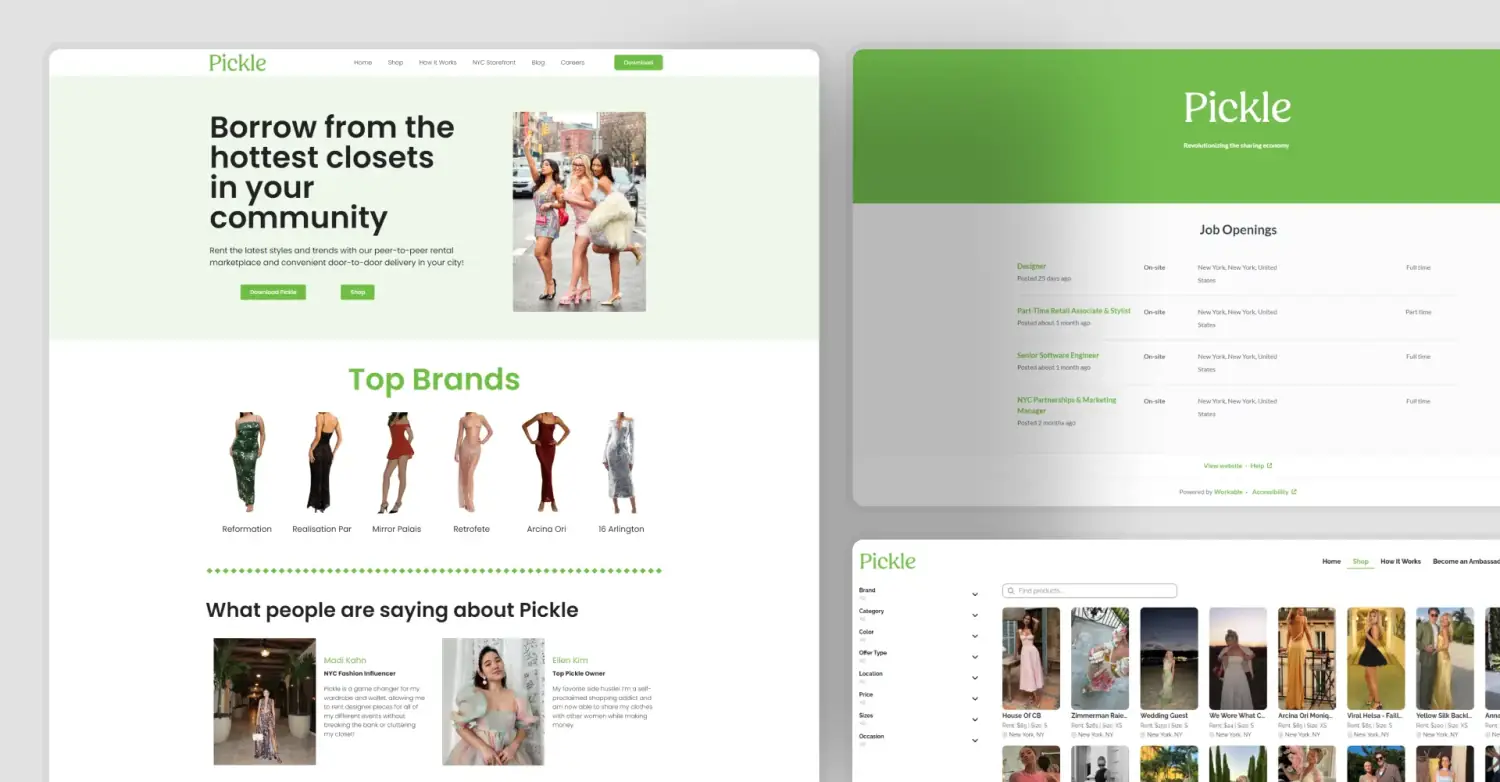
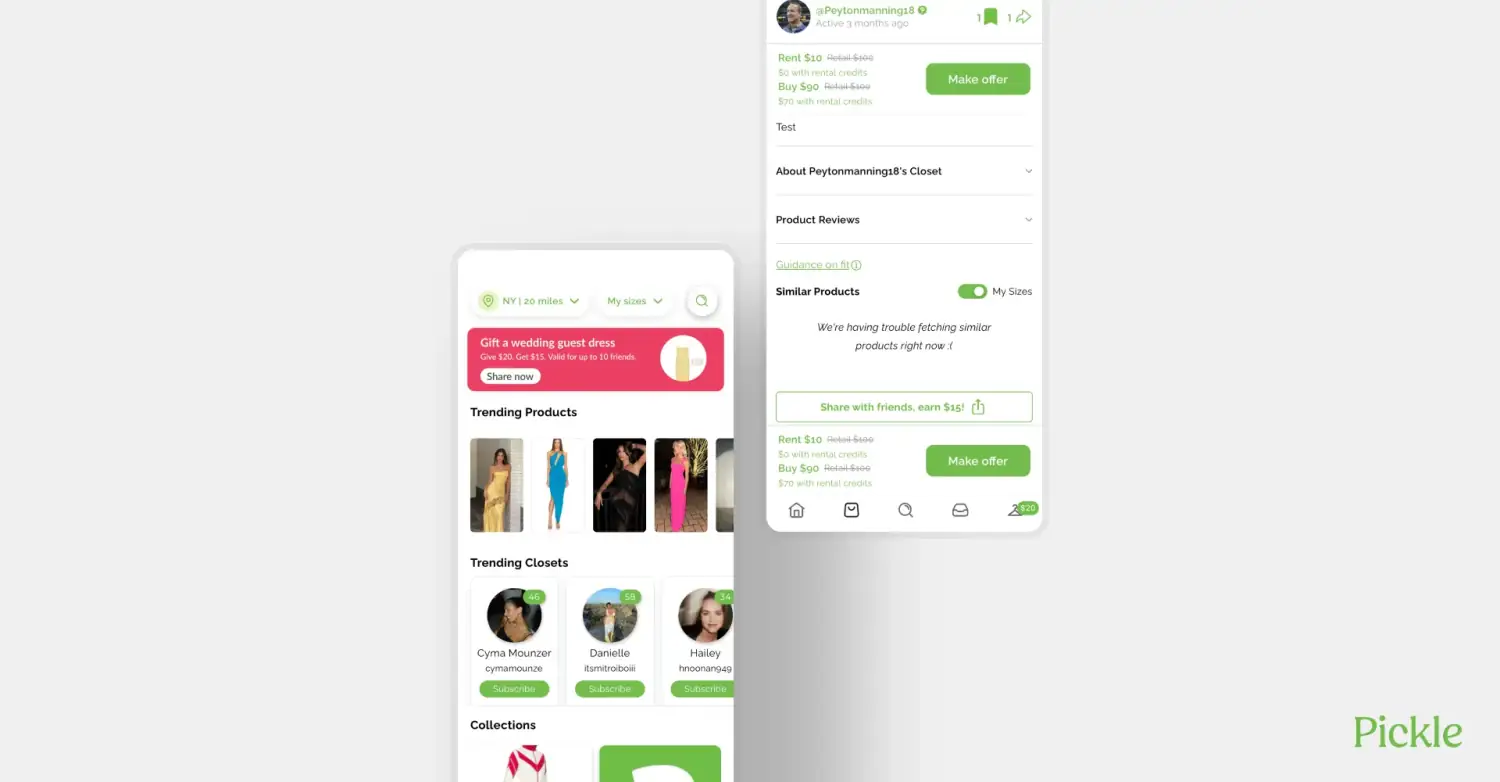
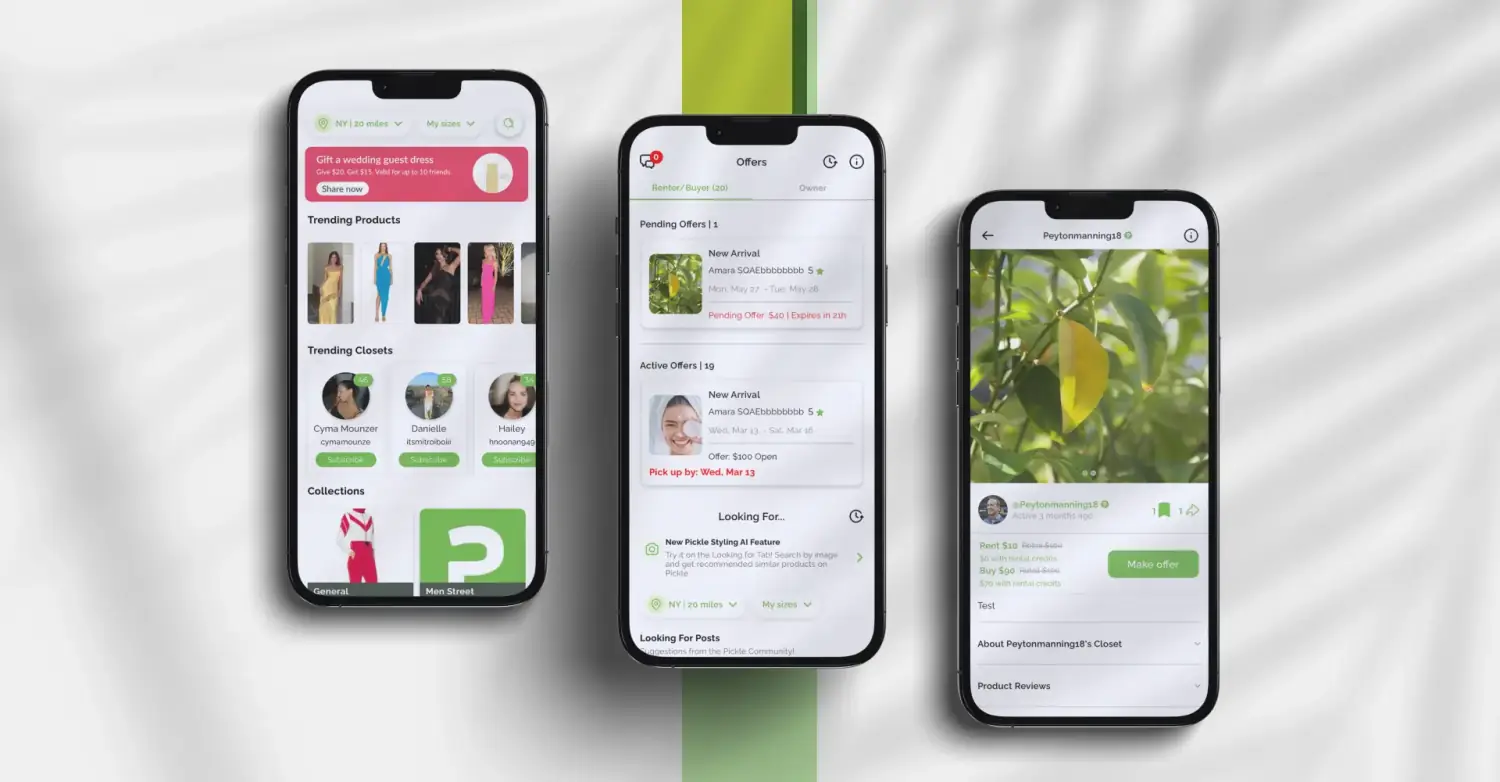
Screens
Client feedback
Performance is over a thousand times better.
I am happy that we have selected AALA IT Solutions as our technical partner. When we have completed our funding, we know we need to deliver. Not only to our customers but to our investors as well. We were looking for the best combination of high-end services and affordable pricing. Pickle was booming, and attracted a wide range of audiences. This resulted in high volume traffic and also required unique features to meet the needs. I personally wanted to improve this constant feeling of the site being slow and wanted it to change.
AALA IT Solutions had listened to us well, and understood the delicacies and analyzed everything, and built a new platform that is blazing fast and packed with features like secure login, data syncing across devices, and easy payments. Renting clothes online is now a breeze. User reviews are fantastic, and thanks to server-side rendering, performance is over a thousand times better. AALA IT Solutions helped us turn things around and create a delightful fashion rental marketplace experience.
Brian McMahonCEO, Pickle
What next
Running something like this?
The engineers who built this are the ones you would work with. Tell us what you have and we will tell you plainly whether it is work we should take.